The most common trees in Fayetteville, NC are longleaf and loblolly pines, water and willow oaks, sweetgum, red maple, and flowering dogwood and crepe myrtle — each with its own care needs and storm risks. Tarhill Tree Service works on these trees every day across Fayetteville and Cumberland, Hoke, Moore, and Harnett counties. Fayetteville sits in the heart of North Carolina’s Sandhills, where sandy soil, hot summers, and the occasional hurricane shape what grows in our yards — so below you’ll find a plain-spoken, species-by-species guide to each tree, the upkeep it needs, and the risks to watch for, leaving you with a clear picture of your property and the confidence to act early.

Longleaf & loblolly pines — the Sandhills signature
If one tree defines the Fayetteville area, it’s the pine. Longleaf pine is the native that gave the Sandhills its character, while fast-growing loblolly pine is what you’ll see crowding most yards and lot lines. Both shoot up tall and straight with the crown bunched at the top — great for shade and privacy, but it also makes them top-heavy in a blow.
- Common risks: Tall pines are the classic storm-snap tree — high winds from a hurricane or summer thunderstorm can break the trunk clean or topple a shallow-rooted pine onto a roof. They’re also the favorite target of southern pine bark beetles, which can kill a stressed pine in weeks; fading needles and popcorn-like pitch tubes on the bark are the warning signs.
- Care tip: Don’t let dead or dying pines stand near the house — brittle pines fail fast. Have crowding pines thinned and watch for beetle damage every summer. If needles are turning rust-brown out of season, get it looked at quickly through our tree health care service.
Water, willow & live oaks — big shade, big limbs
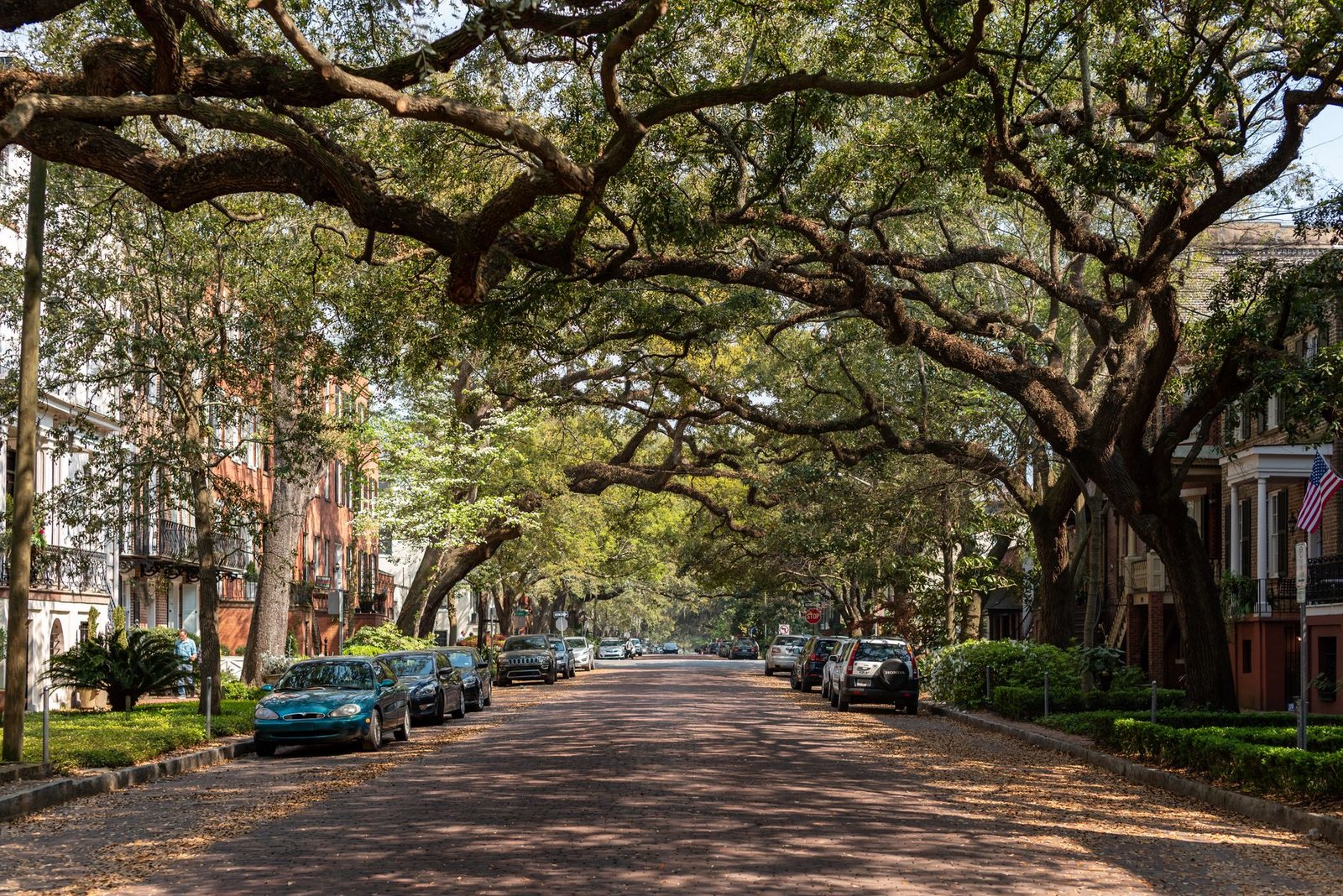
Oaks are the prized hardwoods of Fayetteville’s older neighborhoods — you’ll find water oak and willow oak lining streets in Haymount and the in-town blocks, and the broad, evergreen live oak spreading its heavy horizontal limbs over yards. They deliver decades of shade, but their sheer size is the catch.
- Common risks: Mature oaks carry enormous limbs that can drop in wind or under ice, often with little warning — especially water oaks, which are notorious for weak, rot-prone wood as they age. Oak wilt and other fungal diseases can move through a tree (and to neighbors) and are worsened by pruning during the warm growing season.
- Care tip: Prune oaks in the dormant winter months to lower disease risk, and have large overhanging limbs cabled or reduced before they fail. A regular tree trimming schedule keeps the canopy balanced so no single limb becomes a hazard over your roof or driveway.
Sweetgum — the gumball nuisance
Sweetgum is everywhere in the Cape Fear region, easy to spot by its star-shaped leaves and the spiky seed balls it drops by the hundreds. It grows fast and tall, which is exactly why it causes so many headaches.
- Common risks: Those hard gumballs are a slip-and-fall and mower hazard all over the yard. More importantly, sweetgum tends to grow weak, brittle wood and develops co-dominant trunks that split — a frequent storm-damage caller in our area. Surface roots can also lift sidewalks and driveways.
- Care tip: Have sweetgums structurally pruned while young to encourage one strong central trunk, and remove any tree with a split or included-bark fork before the next storm finishes the job. When a sweetgum is past saving, our tree removal crew takes it down in sections and hauls every gumball-covered branch away.
Red maple — fast color, soft wood
Red maple is one of the most planted shade trees in Fayetteville yards, loved for quick growth and fiery fall color. The trade-off is that it grows soft, fast wood that doesn’t age as gracefully as a slow oak.
- Common risks: Maples are prone to weak, narrow branch unions that crack in wind and ice, and the soft wood is an easy entry point for decay and carpenter ants. Shallow, aggressive roots can crowd lawns and lift hardscape.
- Care tip: Light, regular pruning to remove competing leaders keeps a red maple sound. Watch for hollow spots, mushrooms at the base, or dead branches in the upper canopy — all signs to schedule an inspection through tree health care.
Crepe myrtle — the Southern favorite (just don’t top it)
No Fayetteville street is complete without crepe myrtles — they bloom all summer, handle our heat and sandy soil, and stay small enough for tight spots. They’re low-risk trees, with one big self-inflicted exception.
- Common risks: The real damage usually comes from “crepe murder” — hacking the tree back to stubs every year. That produces weak, whip-like regrowth that flops over in rain. Otherwise watch for sooty mold from aphids and the occasional powdery mildew.
- Care tip: Prune lightly and selectively in late winter — thin out crossing branches and seed heads rather than topping. Done right with proper tree trimming, a crepe myrtle keeps a graceful shape and blooms harder.
Dogwood — the understory beauty
The flowering dogwood is North Carolina’s state flower and a beloved understory tree in shaded Fayetteville yards. It’s small and ornamental, but it’s also one of the fussier trees we see.
- Common risks: Dogwoods are susceptible to anthracnose and powdery mildew, especially when stressed by full sun or drought in our sandy soil. Their thin bark is easily wounded by mowers and string trimmers, opening the door to borers and decay.
- Care tip: Give dogwoods part shade, mulch to keep roots cool, and keep equipment away from the trunk. At the first sign of leaf spotting or dieback, an early diagnosis through tree health care can save the tree.
Knowing your trees before storm season
The Cape Fear region takes the brunt of hurricanes and severe summer storms, and the trees most likely to fail — tall pines, aging water oaks, and brittle sweetgums — are the ones to address before the wind picks up, not after. A quick walk of your property can flag the leaners, the dead limbs, and the cracked forks while there’s still time to act. If you’re not sure what you’re looking at, that’s exactly what we’re here for — no pressure, just a straight answer on whether a tree needs care, a trim, or removal.
Not sure about a tree in your yard?
We’d rather help you keep a healthy tree than talk you into taking one down. If something looks off — a lean, dead branches, beetle damage, fungus at the base — the smart move is a free look from a local crew that knows Sandhills trees. Reach out for a free same-day estimate and we’ll tell you straight what it needs.
Common Fayetteville tree FAQs
Which trees are most likely to fall in a Fayetteville storm?
Tall loblolly and longleaf pines are the most likely to fall — they’re top-heavy and shallow-rooted — followed by aging water oaks with heavy limbs and brittle sweetgums prone to splitting. Dead or leaning trees of any species are the highest risk, and we can assess and handle them through tree removal.
How do I know if my pine has bark beetles?
You’ll see needles fading from green to yellow-brown out of season and small popcorn-like blobs of pitch (pitch tubes) on the bark — those are the tell-tale signs of bark beetles. Beetle-killed pines decline fast, so get it inspected quickly through our tree health care service before it spreads or becomes a hazard.
When is the best time to prune oaks around here?
The best time to prune oaks is the dormant winter months, because pruning during the warm growing season raises the risk of oak wilt and other diseases. Our tree trimming crew schedules oak work for the right window and removes hazardous limbs safely.
Is “crepe murder” really that bad for crepe myrtles?
Yes — it really is that bad. Topping a crepe myrtle to stubs produces weak, floppy regrowth and an ugly knuckled shape. Light, selective pruning in late winter is far better; see our tree trimming service for the right approach.
Can a sick tree be saved instead of removed?
Often, yes — a sick tree can be saved when the problem is caught early, since many diseases and infestations are treatable. We’ll always tell you when a tree can be saved rather than just removed — request a free same-day estimate and we’ll give you an honest call.